
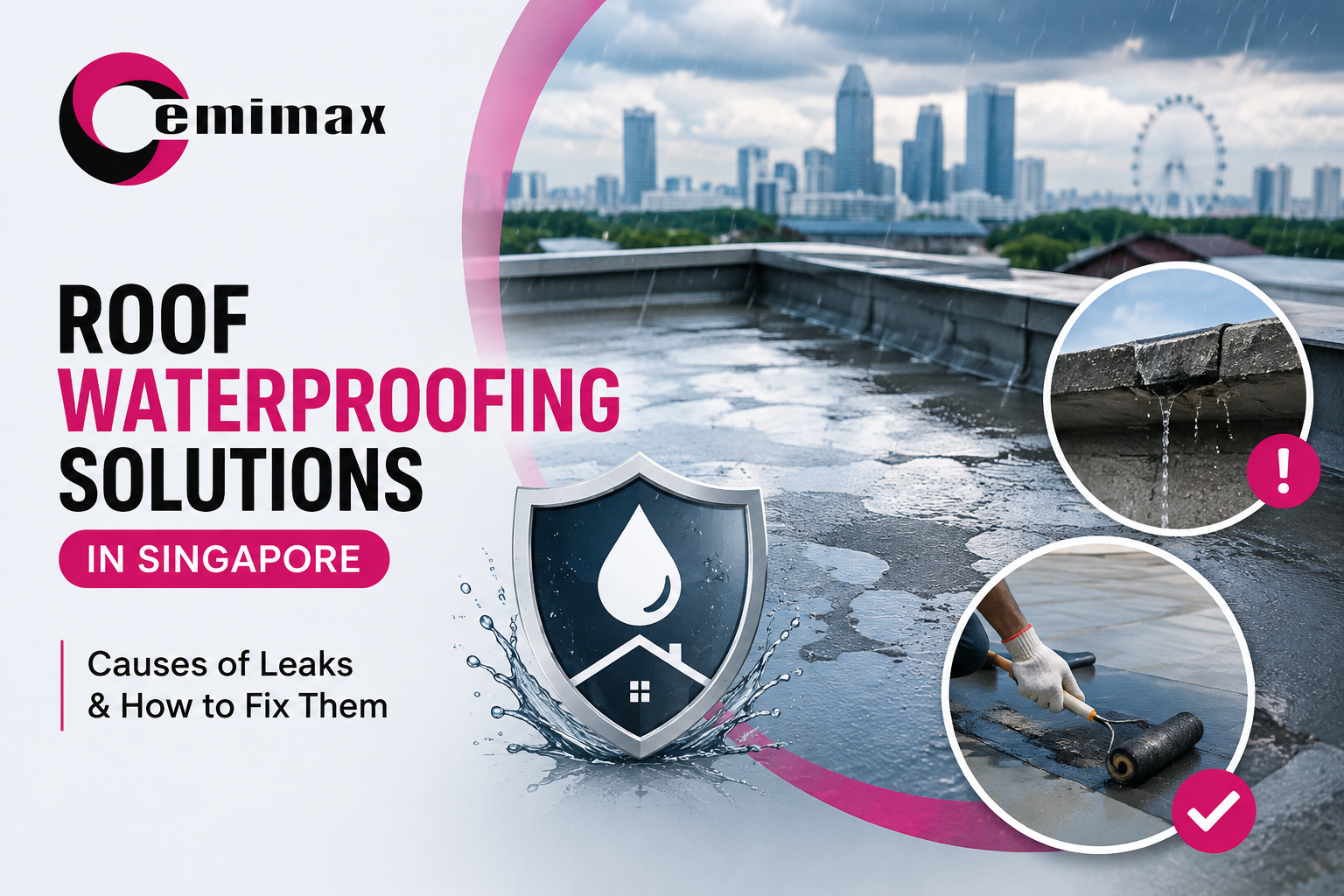
Singapore’s tropical climate demands reliable water proofing solutions. High humidity, intense UV rays, and heavy rainfall combine to break down roof protection faster than in other regions. Most roof leaks start small, but water damage spreads quickly once it penetrates the building envelope. Choosing the right water proofing solutions and addressing leaks early prevents costly structural damage and protects your investment.
Why Roof Waterproofing Matters
Your roof is the first line of defense against moisture intrusion. When waterproofing fails, water seeps into concrete slabs, corrodes reinforcement steel, and damages interior finishes. In commercial buildings, water damage disrupts operations. In residential properties, it creates mold growth and health hazards. A well-maintained waterproof system keeps your property dry for 10-20 years, depending on the method used and maintenance practices.
Common Causes of Roof Leaks in Singapore
Tropical Rainfall and Ponding Water
Singapore receives significant rainfall year-round, with monsoon seasons bringing particularly intense downpours. Poor roof drainage creates ponding water; areas where water collects instead of flowing toward drains. Blocked drains intensify the problem, trapping water on the roof surface and accelerating deterioration. This standing water is especially problematic on flat roofs common in Singapore’s high-rise residential and commercial buildings.
UV Degradation
Singapore’s equatorial location means intense sun exposure. Acrylic coatings and polyurethane membranes degrade under prolonged UV radiation, becoming brittle and creating micro-cracks where water enters. This happens faster in Singapore than in temperate climates due to consistent, year-round intense sunlight.
Concrete Movement and Cracks
Concrete expands and contracts with temperature changes and moisture cycles. This movement creates stress at expansion joints and in concrete slabs, causing cracks that become direct pathways for water seepage. For severe concrete damage, learn about our Concrete Floor Repair solutions to address underlying structural issues.
Failed Waterproof Membranes
Waterproof membranes have finite lifespans. Poor installation workmanship; inadequate overlap, insufficient substrate preparation, improper application; reduces lifespan significantly. Many waterproofing failures result from rushing installation without proper curing time or environmental conditions.
Flashing and Joint Failures
Flashing around pipe penetrations and edges fails when sealants deteriorate or gaps appear at expansion joints. These areas experience constant movement and stress, making them vulnerable points in your building’s defense against water intrusion.
Early Warning Signs
Catch leaks before major damage occurs. Interior signs include:
- Water stains on ceilings or walls (even small marks indicate moisture movement)
- Musty odors in certain areas of your home or office
- Visible mold or mildew on interior surfaces
- Peeling paint in upper floors
- Soft spots or sagging areas on the roof
- Wet patches on exterior walls below roof lines
- Increased humidity in specific rooms
- Discoloration or bloom on walls near the roof line
Exterior signs include visible cracks in concrete, separated sealants at joints, and standing water on flat roofs after rainfall.
Waterproofing Methods Comparison
| Method | Lifespan | Best For | Advantages | Limitations |
| PU Membrane | 12–15 years | Flat roofs, high-traffic areas | Flexible, UV-resistant, seamless | Premium cost, skilled installation needed |
| Cementitious Waterproofing | 8–10 years | New concrete, large surfaces | Cost-effective, eco-friendly | Poor flexibility, cracks with movement |
| Acrylic Coating | 5–8 years | Sloped roofs, maintenance coats | Affordable, easy to apply | Shorter lifespan, UV degradation |
| Torch-On Membrane | 10–12 years | Traditional flat roofs, repairs | Durable, proven technology | Requires heat source, not flexible |
| Bituminous Membrane | 10–15 years | Commercial roofs | Cost-effective, good adhesion | Environmental concerns, temperature-sensitive |
Common Leak Locations
Water does not always leak where it enters. It travels along concrete surfaces until it finds an opening:
- Roof joints and seams where membranes overlap
- Pipe penetrations for plumbing and HVAC
- Parapet wall connections where walls meet the roof
- Expansion joints in concrete slabs
- Roof drains and gutters when clogged
- Air conditioning unit bases where sealants fail
- Damaged corner areas in flat roofs
- Skylights or roof windows with failed gaskets
Understanding these leak points is crucial. Beyond roof waterproofing, your building’s foundation and walls need comprehensive protection. Learn about What Is A Waterproofing Membrane And How Does It Work? to understand the different membrane systems that protect your building envelope from water intrusion.
Repair or Replace: Making the Right Decision
Patch Repair Works When:
- Damage is localized to small areas (under 2 square meters)
- The existing system is still in good condition elsewhere
- The leak is recent and has not spread
Recoating Is Suitable When:
- The original membrane is intact but showing age
- No significant cracks or deterioration exist
- The roof is 5-8 years old
- You want to extend lifespan without full replacement
Complete Waterproofing Is Necessary When:
- Multiple leak locations exist
- The system is over its expected lifespan
- Significant concrete cracks are present
- Water has already caused structural damage
- You are planning major renovations
A professional inspection determines the best approach. Early intervention with patch repairs saves money; delaying leads to replacement costs.
Common Homeowner Mistakes
Avoid these costly errors:
- Ignoring small water stains thinking they will dry out
- Using interior paint or sealants as temporary fixes
- Attempting DIY waterproofing without proper surface preparation
- Mixing incompatible waterproofing products
- Skipping professional inspections to save money initially
- Failing to address underlying drainage issues
- Over-applying waterproofing coating (more is not better)
Maintenance Checklist
Quarterly: Clear roof drains and gutters, look for standing water and sealant failures
Semi-Annually: Professional leak detection, clean gutters thoroughly, check parapet wall seals
Annually: Full interior and exterior inspection, photograph any new cracks or damage
Every 2–3 Years: Professional waterproofing system assessment, test drainage performance, evaluate coating condition under UV exposure
Choosing the Right Waterproofing Contractor
Look for:
- BCA Singapore accreditation and relevant licenses
- Experience with Singapore’s climate and your building type
- References from similar projects (residential, commercial, or industrial)
- Warranties on workmanship (typically 3–5 years)
- Detailed written quotes specifying materials, method, and timeline
- Insurance and bonding for liability protection
- Transparent communication about weather contingencies
- Portfolio of completed projects in similar conditions
Interview multiple contractors before deciding. Quality workmanship matters more than lowest price; poor installation ruins even premium materials.
Preventive Maintenance Pays Off
Investing in maintenance and reliable water proofing solutions now prevents expensive repairs later. Regular inspections, timely repairs, and recoating when needed extend your roof’s lifespan by years. In Singapore’s harsh tropical environment, preventive maintenance combined with quality water proofing solutions is not optional; it is essential for protecting your property’s structure and interior from moisture intrusion. Start with a professional assessment today to understand your roof’s current condition and determine which solutions best fit your property’s needs and budget.
What causes roof leaks in Singapore?
Tropical rainfall, intense UV exposure, concrete movement, failed membranes, and blocked drains cause roof leaks in Singapore. High humidity and heat accelerate deterioration faster than other climates.
How long does roof waterproofing last?
PU membranes last 12–15 years, torch-on and bituminous membranes last 10–15 years, cementitious waterproofing lasts 8–10 years, and acrylic coatings last 5–8 years. Singapore’s tropical climate reduces these lifespans by 20–30%.
Can roof leaks be repaired without full replacement?
Yes, if damage is localized and the system is sound, patch repairs work. However, if multiple leaks exist or the system is over its lifespan, complete waterproofing is more cost-effective long-term.