
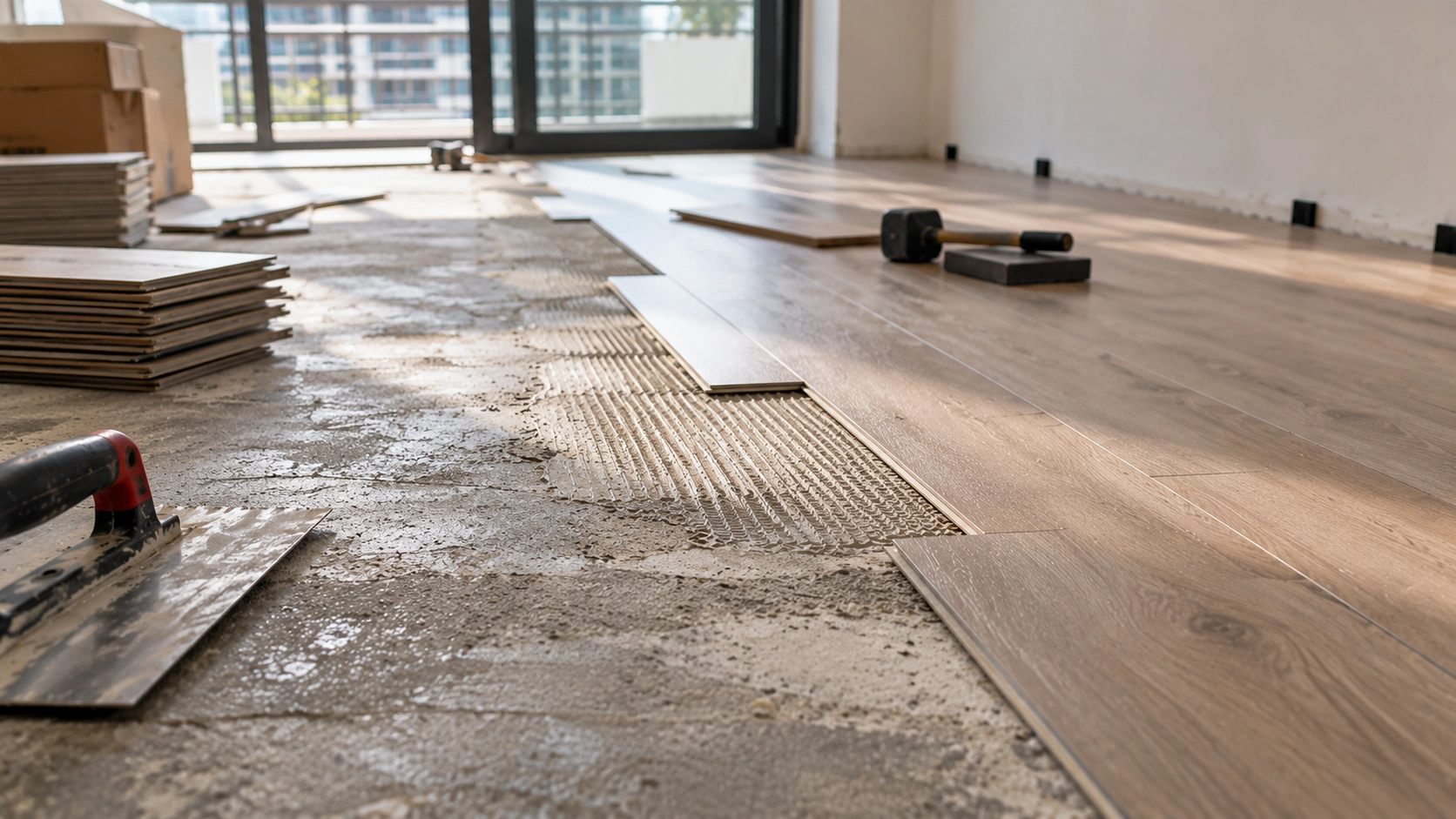
SPC flooring is everywhere in Singapore right now. It is waterproof, affordable, quick to install and comes in hundreds of wood and stone designs. Homeowners love it for HDB and condo renovations. Offices and shops like how well it handles daily wear.
What many people do not realise is that the floor under the planks decides how long they will last. We hear plenty of stories about SPC floors that started clicking, lifting or separating within months. In a lot of those cases the planks were fine. The subfloor was the problem.
SPC vs Vinyl: A Quick Refresher
SPC (stone plastic composite) flooring has a rigid core made from limestone powder and PVC. It usually clicks together and floats over the subfloor.
Vinyl flooring comes in many forms, from glue-down luxury vinyl planks and tiles to sheet vinyl. Glue-down products are bonded directly to the subfloor with adhesive.
Both belong to the wider family of resilient flooring, one of the major flooring categories used today.
Why the Subfloor Matters So Much
Rigid planks need a flat base
SPC is stiff. If the floor underneath has dips or humps, the planks bridge over them instead of sitting flat. Every step then flexes the click joints. Over time the locks wear out, gaps appear and you start hearing that hollow clicking sound underfoot.
Most SPC brands specify a maximum flatness tolerance in their installation guide. Check it before you start, because going outside that tolerance can affect the warranty.
Thin vinyl shows everything
Glue-down vinyl is thin and flexible. Any trowel mark, bump or pothole in the subfloor will telegraph through to the surface. It becomes very obvious when afternoon light comes in low through the windows.
Adhesives need a sound surface
A dusty, weak or uneven substrate is bad news for any vinyl flooring installation. The adhesive grabs onto loose material instead of solid ground. Sooner or later the floor can debond.
How DL24 Helps
Cemimax DL24 Smoothing Compound is made for exactly this kind of work. It levels and smooths interior subfloors at 2 to 5 mm per layer, sets quickly and gives adhesives a uniform surface to bond to. At around 20 MPa it has plenty of strength for normal home and office traffic. Our DL24 guide has the full specs and application tips.
A Simple Subfloor Preparation Checklist
- Remove old flooring completely. Scrape off old adhesive residues or confirm they are well bonded and compatible.
- Check flatness. Use a 2 m straight edge and mark the high and low spots.
- Check moisture. New slabs and ground floors can hold a lot of moisture. Glue-down vinyl is especially sensitive to it. Our article on moisture vapour retarders explains why.
- Repair defects. Fill cracks and holes before levelling.
- Prime. Use the right primer for the substrate. DP101 works well on absorbent surfaces and over well-bonded old adhesive residues.
- Level with DL24. Pour, spread and spike roll to create a flat, smooth surface.
- Let it dry. Do not let the installer rush onto a damp levelling layer.
- Install. For glue-down vinyl, use an adhesive recommended for your product. Our flooring adhesives range covers several floor types. For floating SPC, lay the recommended underlay if the brand requires one.
Can You Lay SPC Directly on Tiles?
This comes up a lot in HDB renovations. In many cases SPC can go over existing tiles as long as they are firmly bonded and flat. Wide or deep grout lines and uneven tiles can still cause trouble though. A skim of smoothing compound over properly primed tiles is a common fix. Check with us which primer suits glazed tiles and always do a bond test first.
Spend a Little on Prep, Save a Lot Later
Frequently Asked Questions
Why is my SPC flooring clicking?
The most common cause is an uneven subfloor. Planks flex over dips and the click joints wear over time.
Do I need to level the floor before SPC?
If the floor is outside the flatness tolerance in the SPC installation guide, yes. Levelling protects both the floor and the warranty.
Which compound is best under SPC or vinyl?
For most homes and offices, DL24 is a good fit. It is quick-setting, economical and gives a smooth surface.
Levelling might add a day and some cost to your project. That is small compared to tearing up and replacing a failed floor. If you are unsure whether DL24 or a stronger compound fits your job, read our DL24 vs DL59 comparison or speak with our team about your subfloor.