
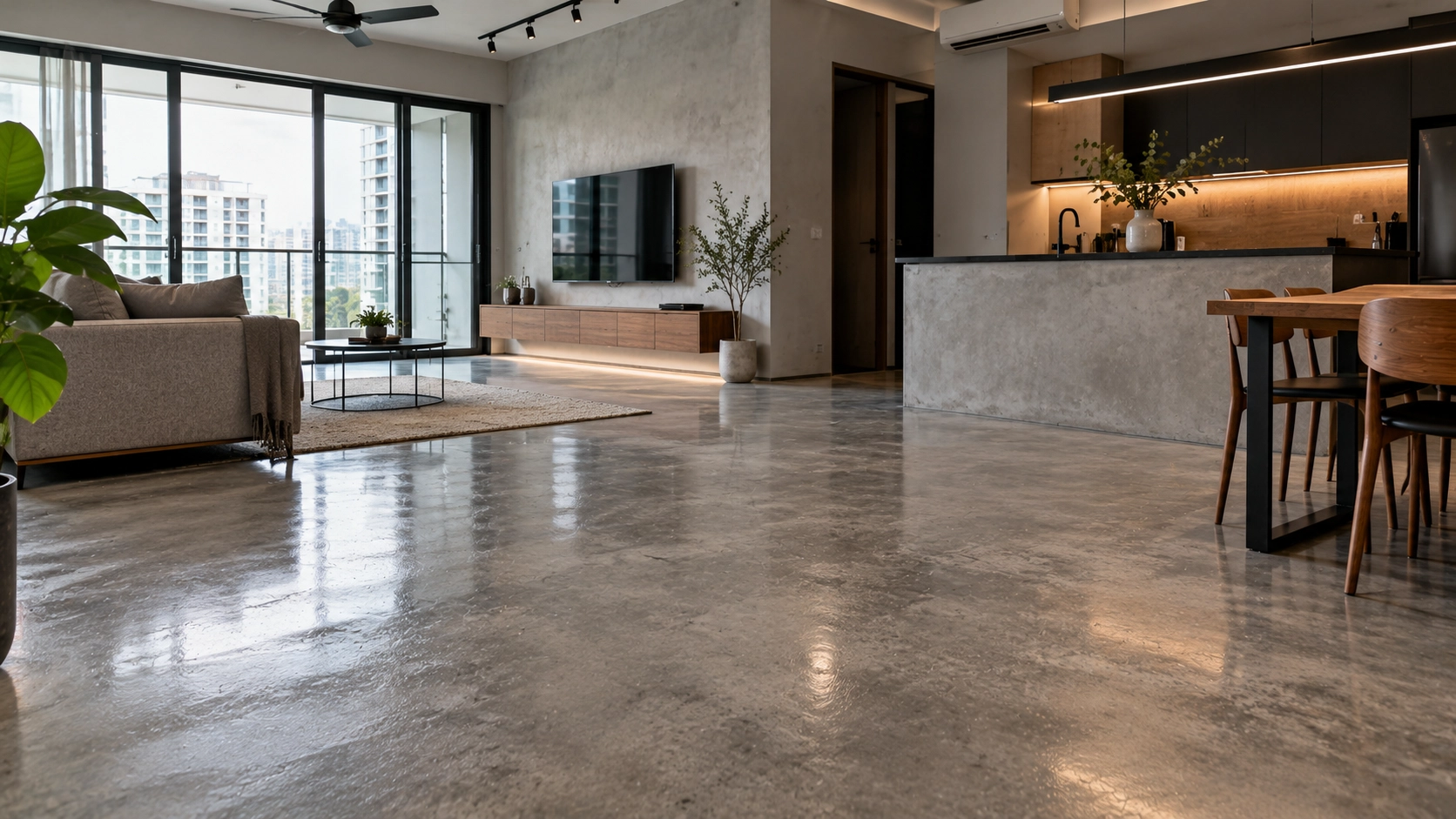
Scroll through any Singapore renovation page and you will spot it. Grey, seamless floors running through living rooms, kitchens and even bedrooms. Cement flooring has moved from warehouses into homes. It is easy to see why.
Before you commit though, it helps to understand what a cement floor really is, how it is installed and what living with one is like. We supply the materials behind many of these floors, so here is our honest take.
Why Homeowners Love Cement Flooring
- Seamless look. No grout lines means a calm, open feel that suits smaller layouts.
- Easy to clean. A sealed cement floor just needs sweeping and mopping.
- Cool underfoot. Very welcome in our hot and humid climate.
- Works with many styles. Industrial style flooring pairs well with Scandinavian, minimalist and Japandi interiors too.
The Different Types of Cement Floor
People use the term loosely. In practice it can mean quite different things.
Cement screed floor
A traditional sand and cement screed that is trowelled smooth and sealed. It is budget friendly but more prone to cracks and patchy tones because it is laid entirely by hand. Our guide to screed explains how it is made.
Self-levelling cement finish
A high-strength self-levelling compound such as Cemimax DL59 is poured over the prepared base, then polished and sealed. The result is flatter and denser than hand-laid screed with a more refined look.
Decorative overlays and microcement
Thin, trowel-applied cementitious coatings that give a textured, hand-finished feel. Our CemITOP decorative overlay sits in this category. We compare these finishes in more depth in our upcoming microcement article.
Honest Pros and Cons
Pros: durable, low maintenance, seamless, stylish and long-lasting when installed well.
Cons: it is hard underfoot, it can develop hairline cracks over time and every floor has natural variation in colour. It also needs resealing now and then, especially in kitchens where oil and sauces can stain.
Can You Have Cement Flooring in an HDB Flat?
Many homeowners do. Before starting, check HDB’s current renovation guidelines and get the necessary permits through your contractor. This is especially important if existing tiles need hacking. Hacking creates a lot of noise and dust, so some owners avoid it by laying the new floor over existing tiles after proper preparation. Whether that works for your HDB flooring depends on the condition of the tiles and needs a professional assessment.
What Makes a Cement Floor Last
- A sound, dry base. Moisture coming up through the slab can cause discolouration and debonding. Read more in our guide to moisture barriers in residential projects.
- Proper priming. The right Cemimax primer improves bond and helps prevent pinholes.
- A strong topping. DL59 reaches around 45 MPa, giving a hard-wearing surface for everyday family life.
- Movement joints. Respect existing joints and plan new ones where needed to control cracking.
- A quality sealer. This protects the floor from stains and makes cleaning easy.
Is It Right for You?
If you want a clean, modern look and can live with a bit of natural character, a cement floor can be a great choice. If you would rather have warmth and softness underfoot, consider timber or SPC over a properly levelled base. Either way the prep underneath makes the difference. Our earlier article on polished concrete floors goes further into the decorative process.
Frequently Asked Questions
Is cement flooring suitable for HDB flats?
Many HDB owners choose it. Check HDB renovation guidelines and permit requirements with your contractor before starting.
Does cement flooring crack?
Fine hairline cracks can appear over time. Good preparation, a strong topping and proper movement joints reduce the risk.
How do I maintain a cement floor?
Sweep and mop with a pH-neutral cleaner. Reseal periodically, especially in the kitchen.
Thinking about a cement floor for your home? Contact Cemimax and share your plans. We can advise on the right materials for your space.