
If you have ever renovated a flat or managed a building project, you have probably heard contractors talk about screed. It is one of those trade words everyone uses but few people actually explain. So what exactly is it? And why does it matter so much for your floor?
What Is Screed?
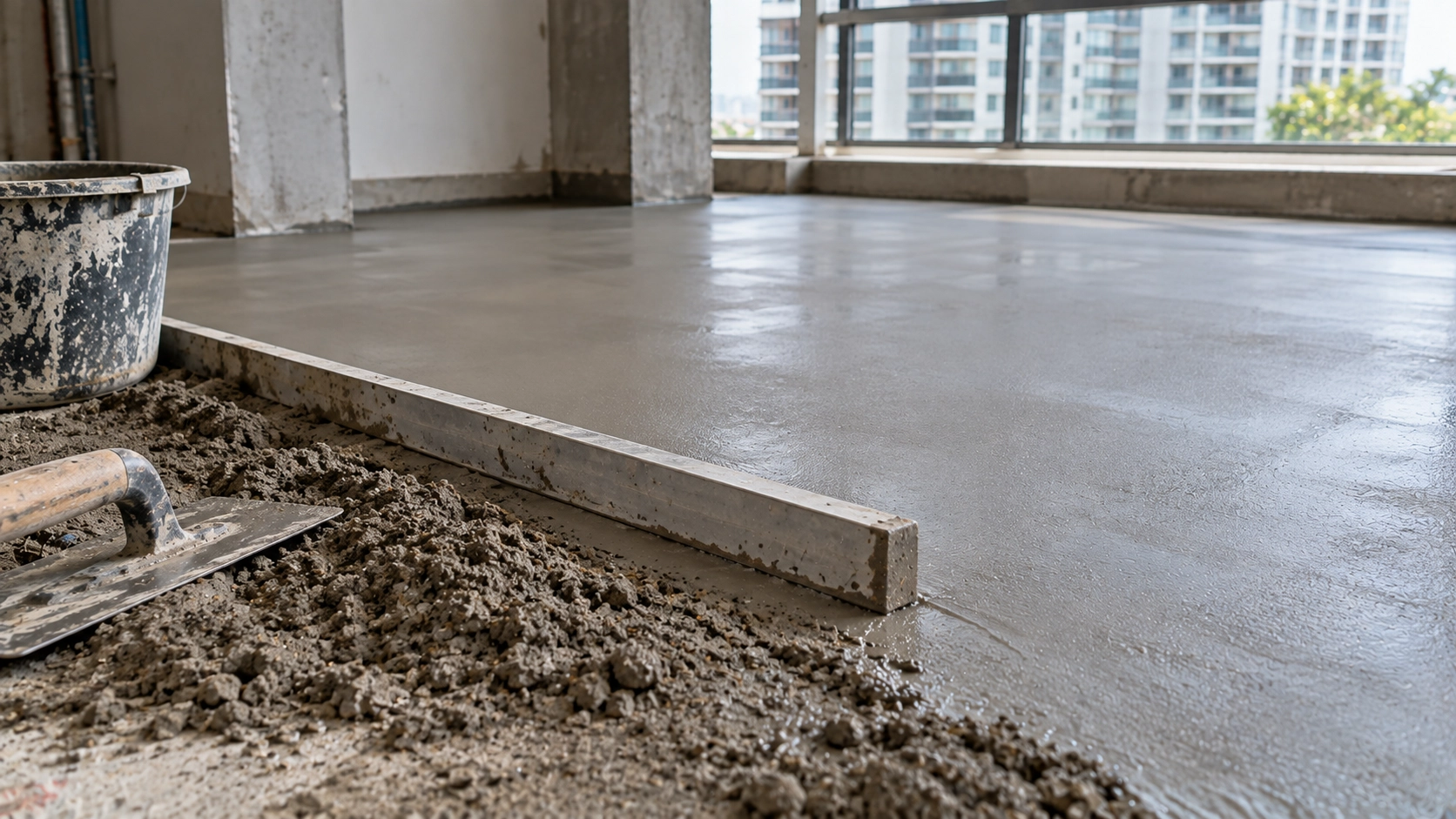
Screed is a layer of material placed over a structural concrete slab to create a level surface for the final floor finish. Traditional floor screed in Singapore is usually a mix of cement and sand. It is spread and compacted by hand, then levelled with a straight edge.
The structural slab is designed to carry loads. It is rarely flat enough on its own to take tiles, vinyl or timber directly. Screed bridges that gap.
Why Is Floor Screeding Needed?
- To create a level surface for the final flooring
- To reach the right floor height, especially where rooms and doorways meet
- To form falls in wet areas like bathrooms and balconies so water drains away
- To cover services such as pipes or underfloor heating
- To give adhesives a consistent surface to bond to
Common Types of Screed
Traditional sand and cement screed
The most familiar type and the one you will see on most HDB and condo jobs. A cement screed floor is cost-effective and suitable for thicker layers. The downside is that quality depends heavily on workmanship. It also needs time to dry. In our humid climate that can stretch longer than people expect.
Bonded screed
Laid directly onto a prepared concrete base with a bonding agent so both layers act as one. Often used for thinner build-ups.
Unbonded screed
Laid over a separating layer such as a membrane. It is thicker and works independently of the slab below.
Floating screed
Laid over an insulation or acoustic layer. Common where sound or thermal performance matters.
Self-levelling screeds and compounds
These are flowable cement-based materials that spread out and find their own level. They are faster to lay and usually flatter than hand-laid screed. Cemimax DL59 can build up to 40 mm while smoothing compounds like DL24 are used at 2 to 5 mm to fine-tune the surface. Our DL24 vs DL59 guide explains which to use when.
What Screed Thickness Do You Need?
It depends on the screed type, the design and the flooring going on top. Traditional screeds are generally laid much thicker than self-levelling products, which are often just a few millimetres. Always follow the project specification and the manufacturer’s data sheet rather than guessing on site.
Screed and Self-Levelling Often Work Together
Many homeowners do not realise this. On a lot of jobs it is not a choice between one or the other. A traditional screed builds up height and falls. Then a thin self-levelling layer goes on top to give a smooth finish for vinyl, carpet or timber. We explained the key differences in our article on cement screed vs self-leveling compound.
Signs Your Screed Needs Attention
- Hollow sounds when you tap the floor
- Cracks running across the surface
- Dusty or crumbly patches
- Tiles cracking or popping up
- Visible dips that collect water
Small defects can often be repaired with a patching compound and then smoothed over. Large hollow or debonded areas may need to be hacked out and relaid. Before any finish goes down, make sure the screed has dried properly. Trapped moisture is one of the most common causes of flooring failure we see. If you are laying SPC or vinyl next, our SPC subfloor checklist is a handy reference.
Need Help with Your Floor?
Frequently Asked Questions
What is the difference between screed and concrete?
Concrete forms the structural slab. Screed is a finishing layer placed on top to create a level surface for the floor covering.
How long does screed take to dry?
It depends on thickness, mix and ventilation. Traditional screed can take a long time in humid conditions, so always test before laying flooring.
Can I put self levelling compound over screed?
Yes, as long as the screed is sound, dry and primed. This is a very common way to get a smooth finish.
Whether you are laying new screed or fixing an old one, Cemimax supplies the primers, patching compounds and self-levelling products to get it right. Contact us to talk through your project.