
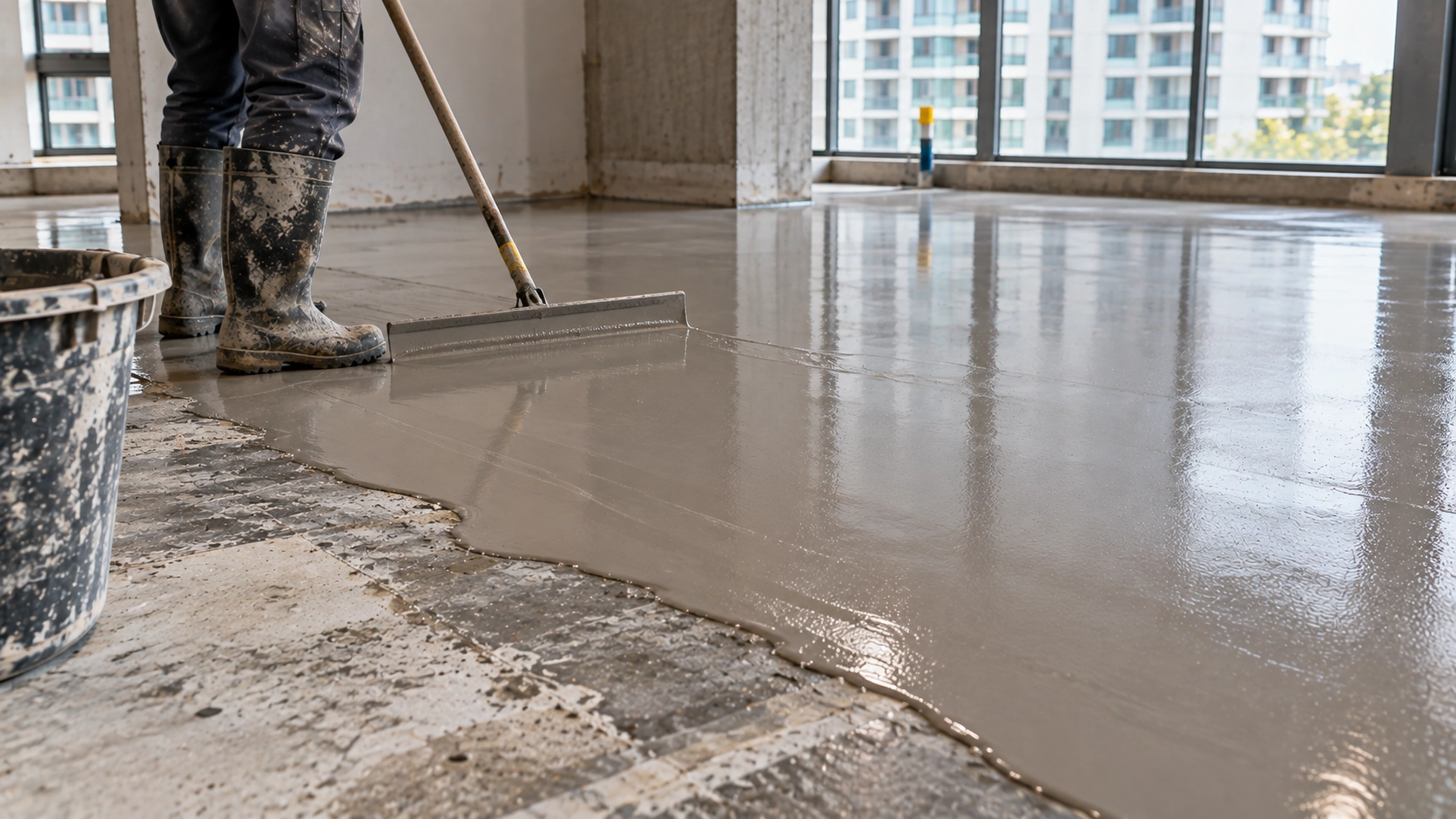
Self leveling screed looks simple on paper. Mix it, pour it, spread it and let it find its own level. On real job sites though, most of the complaints and call-backs we hear about come down to a handful of avoidable mistakes.
To round off our month of floor levelling articles, here are the most common errors we see with products like DL24 and DL59 along with how to avoid them. Think of it as a practical guide on how to apply self leveling compound without the headaches. Most self levelling compound mistakes are easy to avoid once you know them.
1. Skipping Proper Surface Preparation
Pouring straight onto a dusty, oily or weak slab is the number one cause of failure. The compound bonds to whatever is on top. If that layer is weak, the whole floor is weak. Grind or shot blast down to sound concrete and vacuum thoroughly.
2. Not Priming (or Using the Wrong Primer)
Concrete is porous. Without primer it pulls water out of the fresh compound too quickly, which leads to pinholes, poor bonding and weak surfaces. Different substrates need different primers. DP80 and DP101 cover most common situations. Always let the primer dry before pouring.
3. Adding Too Much Water
It is tempting to add extra water so the mix flows further. Please do not. Over-watering causes segregation, a weak dusty surface and more shrinkage cracking. DL59, for example, takes about 4 litres per 20 kg bag. Measure it every time.
4. Ignoring Moisture in the Slab
New slabs and ground floors in Singapore can hold a surprising amount of moisture. Trapped moisture can make floor coverings debond, bubble or smell musty later. Test first and use a moisture vapour retarder if readings are high.
5. Pouring in the Wrong Conditions
Direct sun, strong wind through open windows and high temperatures can dry the surface too fast. Poor ventilation, on the other hand, slows drying right down. Control the environment where you can. Protect fresh pours from rain in open or semi-outdoor areas.
6. Going Too Thick or Too Thin
Every product has a thickness range. DL24 is designed for 2 to 5 mm per layer while DL59 works from 1.5 mm up to 40 mm. Going outside the range can cause cracking, low strength or incomplete levelling. Choose the product that suits the depth you need. Our DL24 vs DL59 guide can help.
7. Not Mixing Enough Material
Running out halfway is a real problem. These compounds have a working time of about 20 to 30 minutes, so any delay creates visible joints and uneven patches. Calculate quantities with a buffer and organise enough manpower to keep a wet edge.
8. Forgetting the Spike Roller
Air trapped during mixing rises to the surface as bubbles and pinholes. A quick pass with a spike roller releases it and blends the strips together. It takes minutes and makes a big difference to your self leveling floor.
9. Pouring Over Movement Joints
Movement joints in the base slab exist for a reason. Pouring over them without carrying them through the new layer almost guarantees a crack in the same spot later.
10. Laying Flooring Too Early
A floor you can walk on is not necessarily ready for adhesive and floor coverings. Self leveling compound drying time depends on thickness, temperature and airflow. Rushing this step undoes all the good work before it.
Quick Pre-Pour Checklist
- Substrate ground, repaired and vacuumed
- Moisture tested
- Primer applied and dry
- Correct product chosen for the thickness required
- Bags counted with extra for wastage
- Water measured for every bag
- Mixer, rake and spike roller ready
- Doors and windows managed to prevent drafts
If you want to go deeper, there is good background reading on how self-leveling concrete works and on the Portland cement chemistry behind it.
Get It Right the First Time
Frequently Asked Questions
Why does my self levelling compound have pinholes?
Pinholes usually come from skipping primer or not using a spike roller. Air escaping from porous concrete rises through the fresh compound.
Why is my levelled floor dusty?
Too much water in the mix is the most common reason. Weak surface layers underneath can also contribute.
How long should I wait before laying flooring?
It depends on thickness, temperature and airflow. Follow the technical data sheet and test the surface before installing.
Every product we supply comes with a technical data sheet for a reason. Read it, follow it and call us if anything is unclear. Our team has supported flooring contractors for over 25 years. We would much rather answer a question before the pour than after it. Contact Cemimax for advice on your next project or revisit our DL59 guide and DL24 guide for product details.